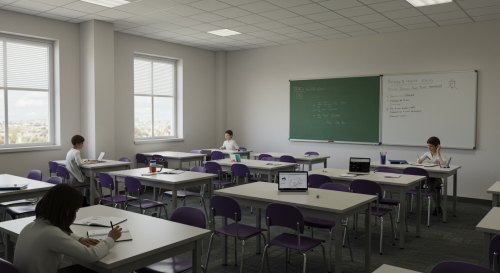
Digital tools are reshaping education, but the real breakthroughs are happening not in futuristic labs, but in everyday classrooms. Teachers are blending data, content, and human insight to give students personalized pathways through lessons, exercises, and assessments. This shift is not just about flashy apps; it is about designing learning experiences that adapt in real time to what students know, how they struggle, and where they are headed academically.
1. Personalized Learning Paths for Every Student
One of the most visible changes in modern classrooms is the move away from one-size-fits-all instruction. Instead of marching every student through the same worksheet or textbook page, teachers now rely on systems that suggest tasks, readings, and quizzes tailored to each learner’s pace and proficiency. These tools can shorten practice for skills already mastered, extend time for weaker areas, and surface targeted support materials just when a student needs them most.
For instance, after a quick diagnostic quiz, a learner who shows strong comprehension might receive more complex, open-ended tasks, while a peer who struggles with fundamentals might see scaffolded questions, hints, and visual aids. Over time, the system refines each student profile, helping educators provide both remediation and enrichment without having to build dozens of different lesson plans by hand.
2. Real-Time Feedback and Continuous Assessment
Traditional assessments often arrive too late to be truly useful. By the time a teacher grades a pile of tests, the class has already moved on. In contrast, technology-rich classrooms are starting to use continuous, low-stakes assessments that feed insights back to learners instantly. Mistakes are flagged as soon as they appear, and students can see which concepts they have misunderstood before those errors become entrenched.
Alongside automated grading of objective questions, many platforms support guided feedback on open responses, helping students understand not only whether they are right or wrong, but why. This supports a growth mindset: errors become opportunities for learning rather than final verdicts on ability. Teachers then review aggregated results, identifying patterns that signal when a whole class needs a concept revisited or when a small group needs targeted support.
3. Language Support and Global-Classroom Connectivity
Classrooms are increasingly multilingual, with students coming from diverse language backgrounds. To keep everyone engaged, educators must ensure that content and instructions are understandable across languages. Modern platforms integrate translation features that help students access materials in their preferred language while preserving the teacher’s original structure and intent. This opens the door to international projects, cross-border collaborations, and global content sharing.
However, raw automated translation is rarely good enough for education, where nuance, clarity, and accuracy are critical. That is why many institutions rely on services like machine translation post-editing to refine multilingual resources for assignments, exams, and parent communication. The result is a more inclusive classroom where language barriers are lowered without sacrificing quality or precision.
4. Data-Driven Insights for Teachers
Educators have always read their students’ expressions and body language to gauge understanding. Today, those qualitative impressions are supported by quantitative data from quizzes, practice tasks, and interactive activities. Dashboards can highlight which concepts are most problematic, which students are at risk of falling behind, and which teaching strategies are working best.
Instead of spending hours manually tallying scores, teachers receive concise reports they can act on quickly. This might mean regrouping students for a targeted workshop, adjusting homework volume, or revising lesson pacing. As data accumulates over weeks and months, it can inform curriculum design, support intervention programs, and provide evidence for school-wide decisions about resources and training.
5. Supporting Teachers Rather Than Replacing Them
Despite fears that intelligent tools could sideline educators, real-world classrooms show the opposite. Teachers remain central, using technology as a support system rather than a substitute. Automated systems handle time-consuming tasks such as repeated drill practice, basic grading, and content recommendations, freeing teachers to focus on higher-order work: mentoring, discussion, and personalized coaching.
This shift elevates the teacher’s role from information deliverer to learning architect. Educators use insights from their tools to decide when to lead whole-class instruction, when to break into small groups, and when to assign self-paced activities. They also bring critical judgment to every recommendation a system makes, filtering suggestions through deep knowledge of their students’ backgrounds, emotions, and motivation.
6. Differentiation in Mixed-Ability Classrooms
Mixed-ability classes have always challenged schools. With students reading at different levels, processing information at different speeds, and demonstrating knowledge in diverse ways, it is difficult to provide equitable support. Learning platforms now make it easier to differentiate content and difficulty, allowing students to work on variations of the same core topic while staying aligned with curriculum goals.
For example, a lesson on ecosystems might present simplified texts with visual supports for emerging readers, more complex articles for advanced students, and interactive simulations for hands-on learners. The teacher orchestrates these options, ensuring that expectations remain high while pathways remain flexible. In this way, every student can engage meaningfully with the same central concept, reducing boredom for advanced learners and frustration for those who need more guidance.
7. Building Skills for Lifelong Learning
Adaptive and data-informed tools in classrooms do more than improve test scores. They help students build essential skills for lifelong learning, including self-assessment, goal setting, and strategic help-seeking. When learners see their progress visualized and receive tailored recommendations, they begin to understand how they learn best and how to manage their own study habits.
Over time, students become more independent and reflective. They learn to interpret feedback, revise their work, and pursue enrichment resources proactively. These habits prepare them not only for later academic challenges, but also for a world in which new skills must be acquired continuously, both on and off digital platforms.
Human-Centered Technology in Everyday Classrooms
The most effective classroom technologies are those that serve human goals: understanding students better, making learning more inclusive, and giving teachers the tools to act on rich streams of data. When thoughtfully implemented, these systems do not overshadow the human relationships at the heart of education. Instead, they enhance them, making it possible to deliver deeply personalized instruction even in large, diverse classes.
As schools continue to refine their use of digital platforms, the focus should remain on balance. Data and automation provide structure and insight, while teachers provide empathy, creativity, and context. In that partnership lies the potential for classrooms that respond dynamically to student needs, connect across languages and cultures, and prepare learners for the complex challenges of the future.